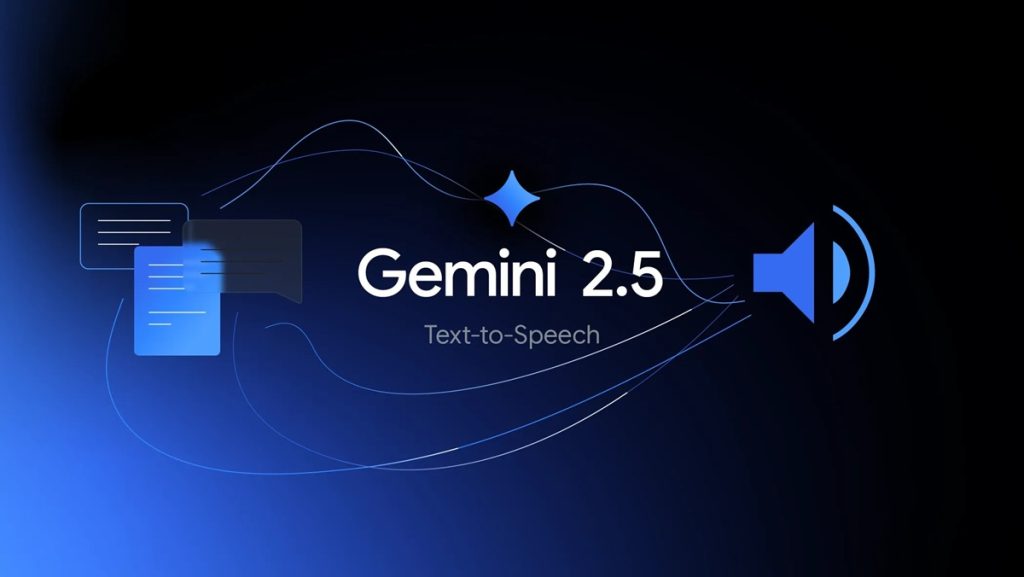
Google has significantly upgraded its Text-to-Speech (TTS) capabilities, leveraging Gemini 2.5 to deliver enhanced expressivity, context-aware pacing, and robust multilingual support, making AI-generated voices virtually indistinguishable from human speech.
Introduction (The Lede)
Google has unveiled a major leap forward in its Text-to-Speech (TTS) technology, powered by the advanced Gemini 2.5 AI model. These enhancements bring an unprecedented level of naturalness and nuance to AI-generated voices, featuring improved expressivity, intelligent context-aware pacing, and expanded multilingual support. This development sets a new benchmark for synthetic speech, pushing the boundaries of what's possible in human-computer interaction and content creation.
The Core Details
The latest advancements to Google Cloud's Text-to-Speech API, underpinned by Gemini 2.5, introduce several critical features designed to elevate the realism and utility of AI voices. These improvements are available to developers and businesses leveraging Google Cloud's AI services:
- Enhanced Expressivity: The system can now generate a wider and more subtle range of vocal styles, tones, and emotions, allowing AI voices to convey moods like excitement, empathy, or seriousness with greater fidelity. This moves beyond simple monotone delivery to truly dynamic and engaging speech.
- Context-Aware Pacing (Prosody): A groundbreaking feature that enables the AI to analyze the surrounding text and adapt its speech rhythm, pauses, and intonation accordingly. This intelligent understanding of context prevents robotic-sounding delivery, ensuring natural flow and emphasis, much like a human speaker would adjust their speech based on meaning.
- Improved Multilingual Support: Google has significantly bolstered the system's performance across numerous languages. This ensures that the naturalness, expressivity, and contextual awareness are maintained consistently, making high-quality AI voices accessible and effective for global applications.
These new capabilities are integrated into the existing Google Cloud Text-to-Speech API, making them readily available for developers to incorporate into their applications.
Context & Market Position
This expansion of Gemini 2.5's TTS capabilities places Google firmly at the forefront of the rapidly evolving AI voice synthesis market. Traditional TTS systems often struggled with the nuances of human speech, producing robotic or unnatural-sounding audio. The demand for more human-like AI voices has exploded across various sectors, from customer service and education to content creation and accessibility tools.
Google's competitors, such as Amazon Polly, Microsoft Azure Cognitive Services Speech, and specialized AI voice companies like ElevenLabs and PlayHT, have also made significant strides. However, Google's integration of these advanced features with Gemini 2.5, its leading multimodal AI model, provides a distinct advantage, leveraging deep contextual understanding that goes beyond mere phonetics. This update not only enhances existing offerings but also positions Google to capture a larger share of the enterprise market looking for robust, scalable, and highly natural voice solutions. It represents a substantial upgrade from previous Google TTS iterations, which, while capable, lacked the sophisticated expressivity and contextual awareness now provided by Gemini 2.5.
Why It Matters (The Analysis)
The implications of Google's enhanced Gemini 2.5 TTS are far-reaching. For consumers, this means interacting with AI systems that sound genuinely human, leading to more natural and less frustrating experiences in everything from smart assistants to automated customer service. The improved expressivity can make educational content more engaging, audiobooks more immersive, and accessibility tools more effective for visually impaired users.
For businesses and developers, these advancements unlock new possibilities. Call centers can deploy AI agents that sound empathetic and responsive, improving customer satisfaction. Content creators can generate high-quality voiceovers in multiple languages without needing professional voice actors, democratizing content production. The ability to automatically adjust pacing based on context drastically reduces the need for manual fine-tuning, streamlining workflows and reducing costs. This represents a significant step towards AI voices becoming truly indistinguishable from human speech, fundamentally changing how digital content is produced and consumed, and raising critical questions about authenticity and the future of human-AI collaboration.
“These advancements, powered by our cutting-edge Gemini models, mark a significant leap forward in making AI voices indistinguishable from human speech, opening up new possibilities for how businesses interact with their customers and create immersive content.”
— Jack Krawczyk, Senior Director, Product Management, Google Cloud AI
What's Next
Looking ahead, we can expect Google to further refine these TTS capabilities, potentially introducing even more granular control over emotional range and distinct vocal characteristics. The deeper integration with other Gemini functionalities could lead to AI voices that not only speak naturally but also understand and respond with even greater semantic and emotional intelligence. This ongoing innovation will likely accelerate the adoption of advanced AI voice solutions across all industries, pushing towards an era where synthetic speech is not just functional, but truly intuitive and indistinguishable from human interaction.