Google has launched Workspace Studio, a comprehensive platform designed to empower businesses with end-to-end AI automation, integrating seamlessly with existing Workspace applications and bringing advanced Gemini capabilities to everyday workflows.
Introduction (The Lede)
Google has officially rolled out Workspace Studio, a pivotal new platform aimed at democratizing AI-powered automation for businesses of all sizes. Announced as a major step forward in enterprise productivity, Workspace Studio brings together Google's formidable AI capabilities, including Gemini for Google Workspace and AppSheet Automation, into a unified environment, enabling organizations to build custom workflows and intelligent agents without extensive coding.
The Core Details
Workspace Studio represents a significant consolidation and enhancement of Google's automation tools, designed to simplify complex business processes. Key features and components include:
- Gemini for Google Workspace: At its heart, Workspace Studio leverages Gemini, Google's advanced AI models, to power intelligent agents and automate tasks across applications like Gmail, Docs, Drive, Chat, and Meet. This allows for smart content generation, data extraction, summarization, and more, directly within familiar interfaces.
- AppSheet Automation Integration: The platform deeply integrates AppSheet Automation, Google's low-code/no-code development tool. This enables business users to visually design and implement sophisticated workflows, connecting various data sources and applications, both within and outside Workspace.
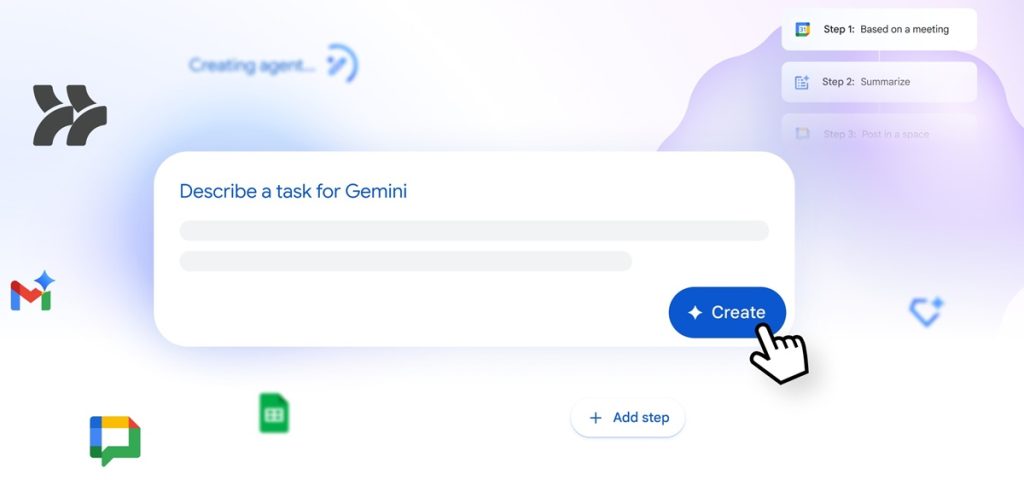
- Custom AI Agents & Bots: Users can now create bespoke AI agents using natural language prompts, tailored to specific business needs. These agents can assist with customer service, data analysis, task management, and more, operating intelligently across different platforms.
- Data Connectors & APIs: Workspace Studio provides robust connectors to a wide array of enterprise systems, databases, and third-party applications, facilitating seamless data flow and process orchestration across the entire tech stack.
- Security & Governance: Built on Google Cloud's secure infrastructure, the platform includes enterprise-grade security, data privacy controls, and compliance features, ensuring businesses can automate with confidence.
Context & Market Position
The introduction of Workspace Studio positions Google as a more formidable contender in the rapidly evolving landscape of enterprise automation and AI integration. Traditionally, this space has been dominated by players like Microsoft with its Power Platform (Power Automate, Power Apps) and Salesforce with its robust automation capabilities. Google's advantage lies in the deep, native integration within the immensely popular Google Workspace ecosystem, which millions of businesses already use daily. Unlike standalone automation platforms, Workspace Studio offers a 'single pane of glass' experience, making AI and automation accessible where work already happens.
It also stands as a significant upgrade to its predecessor, Duet AI, evolving from an assistant to a comprehensive development platform. While AppSheet has long provided low-code options, Workspace Studio amplifies its power by embedding advanced generative AI, moving beyond simple task automation to truly intelligent workflow design. This convergence aims to simplify IT complexity and empower citizen developers, directly challenging more complex RPA (Robotic Process Automation) and iPaaS (Integration Platform as a Service) solutions by offering a more user-friendly, AI-native approach.
Why It Matters (The Analysis)
Workspace Studio is not just another product launch; it's a strategic move that could fundamentally alter how businesses operate within the Google ecosystem. For consumers and employees, it means a significant reduction in tedious, repetitive tasks, freeing up time for more creative and strategic work. Imagine AI agents automatically triaging emails, summarizing long documents, scheduling meetings, or generating custom reports – all within the familiar Workspace environment. This promises a substantial boost in productivity and employee satisfaction.
For the industry, it democratizes AI. By embedding advanced generative AI and low-code tools directly into Workspace, Google empowers non-technical users to build sophisticated solutions, diminishing the reliance on specialized developers for every automation need. This could accelerate digital transformation initiatives, particularly for small and medium-sized businesses that lack extensive IT resources. For Google, it solidifies its position as a holistic enterprise solution provider, making Workspace stickier and more competitive against Microsoft's ubiquitous Office 365. The value proposition is clear: reduce operational costs, enhance efficiency, and foster innovation by putting powerful AI tools directly into the hands of business users.
“Workspace Studio is about empowering every user, from the business analyst to the IT professional, to harness the power of AI to transform their daily work. We're bringing generative AI directly into the workflows where people are already collaborating.”
— Aparna Pappu, VP and GM, Google Workspace
What's Next
Looking ahead, the success of Workspace Studio will hinge on its adoption rates and the breadth of its integration capabilities. We can expect Google to continue expanding its library of connectors, enhancing Gemini's contextual understanding, and introducing more industry-specific templates and solutions. The focus will likely remain on making AI accessible and actionable for every type of business challenge. Future iterations may see even deeper integration with Google Cloud services, offering a seamless continuum from data storage and processing to intelligent automation, further cementing Google's holistic enterprise offering.