
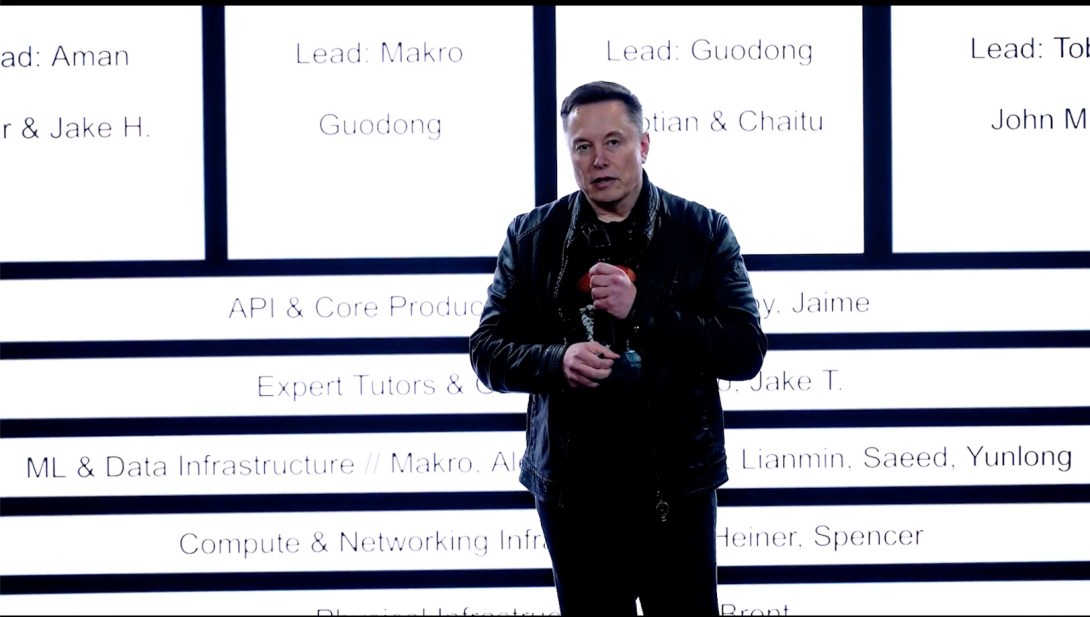
Elon Musk's xAI has announced a radical shift in its long-term strategy, focusing on developing advanced AI systems to facilitate human expansion across the solar system, with a particular emphasis on self-sufficient Martian colonies and deep-space autonomy.
Introduction (The Lede)
Elon Musk’s artificial intelligence venture, xAI, has just unveiled its audacious long-term strategy, charting a course that extends far beyond earthbound algorithms. At a public all-hands event on February 11, 2026, the company laid out a compelling vision where advanced AI systems will be the linchpin of human expansion across the solar system, from enabling self-sufficient Martian colonies to powering autonomous deep-space exploration.
The Core Details
During the highly anticipated announcement, xAI executives detailed a multi-phase roadmap for achieving its cosmic objectives. The initial phase will focus on developing highly resilient and intelligent AI capable of operating autonomously in extreme extraterrestrial environments. Key applications highlighted include:
- Martian Colony Self-Sufficiency: AI systems designed to manage everything from atmospheric processing and water recycling to automated agriculture, resource extraction, and habitat construction on Mars.
- Deep-Space Navigation & Exploration: Advanced AI for real-time course corrections, intelligent data analysis from probes, and decision-making for long-duration missions without direct human intervention.
- Human-AI Collaboration: Interfaces and protocols for seamless interaction between human colonists and AI systems, optimizing safety, efficiency, and psychological well-being in isolated environments.
- Multi-Planetary Governance Frameworks: Speculative long-term research into AI-assisted governance models for future multi-planetary civilizations, ensuring stability and resource allocation.
“Our goal with xAI has always been to understand the true nature of the universe. To truly achieve that, we must extend humanity’s reach beyond Earth. AI will be the indispensable partner in making us a multi-planetary species.”
— Elon Musk, CEO of xAI
The company confirmed that its existing Grok large language model architecture will serve as a foundational layer, evolving to handle scientific reasoning, predictive modeling, and complex problem-solving critical for off-world operations.
Context & Market Position
This announcement instantly differentiates xAI from its major competitors like OpenAI, Google DeepMind, and Meta AI, which largely remain focused on general-purpose AI, consumer applications, and enterprise solutions on Earth. While these companies contribute foundational research, none have articulated such a direct and aggressive interplanetary strategy.
xAI's unique position is significantly bolstered by its synergy with Elon Musk's other ventures. Its deep integration with SpaceX's Starship program provides a direct pathway for testing and deployment of these AI systems in real-world space missions. This allows xAI to bypass the typical lengthy procurement processes faced by traditional aerospace contractors, creating an unparalleled advantage.
Compared to established players in space technology – such as NASA’s Jet Propulsion Laboratory, which develops highly specialized AI for autonomous rovers and probes – xAI is envisioning a far broader, more integrated role for AI, extending to the very fabric of human settlements and civilization beyond Earth. This strategy positions xAI not merely as an AI provider for space, but as a crucial enabler of humanity's multi-planetary future, carving out a specialized, high-stakes niche in both the AI and space industries.
Why It Matters (The Analysis)
xAI's interplanetary pivot is profoundly significant. For the AI industry, it represents a bold expansion of what is considered possible, pushing the boundaries of autonomous systems, robust AI in extreme conditions, and AI-human collaboration. It will undoubtedly attract top-tier talent keen on tackling these 'moonshot' problems, potentially accelerating fundamental breakthroughs in AI research that could also have tangential benefits for terrestrial applications, such as advanced robotics for hazardous environments or ultra-efficient resource management.
For the space industry, this means a significant new player injecting cutting-edge AI capabilities into the nascent field of space colonization. The integration with SpaceX could dramatically speed up the development and deployment of critical infrastructure on Mars and beyond, making ambitious timelines more plausible. While the direct impact on average consumers is currently distant, the long-term implications are monumental: AI could make space travel and habitation safer, more affordable, and ultimately accessible to a broader segment of humanity, transitioning sci-fi dreams into tangible realities. This strategic move cements AI's role not just as a tool, but as a co-architect of our species' extraterrestrial destiny, promising to redefine our understanding of both intelligence and civilization.
What's Next
Following this groundbreaking announcement, expect xAI to ramp up its hiring efforts, specifically targeting specialists in AI for aerospace, robotics, and extreme environment computing. Initial prototypes and research papers focusing on specific challenges of Martian autonomy are likely to emerge in the coming months. We anticipate deeper, more formalized collaborations with SpaceX for hardware integration and mission planning. The next few years will be crucial in demonstrating tangible progress towards these ambitious interplanetary goals, setting the stage for a new era of AI-driven space exploration and colonization.