As discussions around OpenAI's monetization strategies intensify, reports suggest that advertisements, potentially 'not exactly subtle,' could be integrated into the ChatGPT experience, marking a significant shift for the popular AI assistant and its users.
Introduction (The Lede)
The free tier of OpenAI's ChatGPT, which rapidly became a household name, may soon see a fundamental shift in its user experience with the rumored introduction of advertisements. While OpenAI has been actively exploring various monetization avenues, recent discussions highlight the potential for 'not exactly subtle' ad placements, raising questions about the future of the AI assistant's clean interface and its impact on user perception and the broader AI landscape.
The Core Details
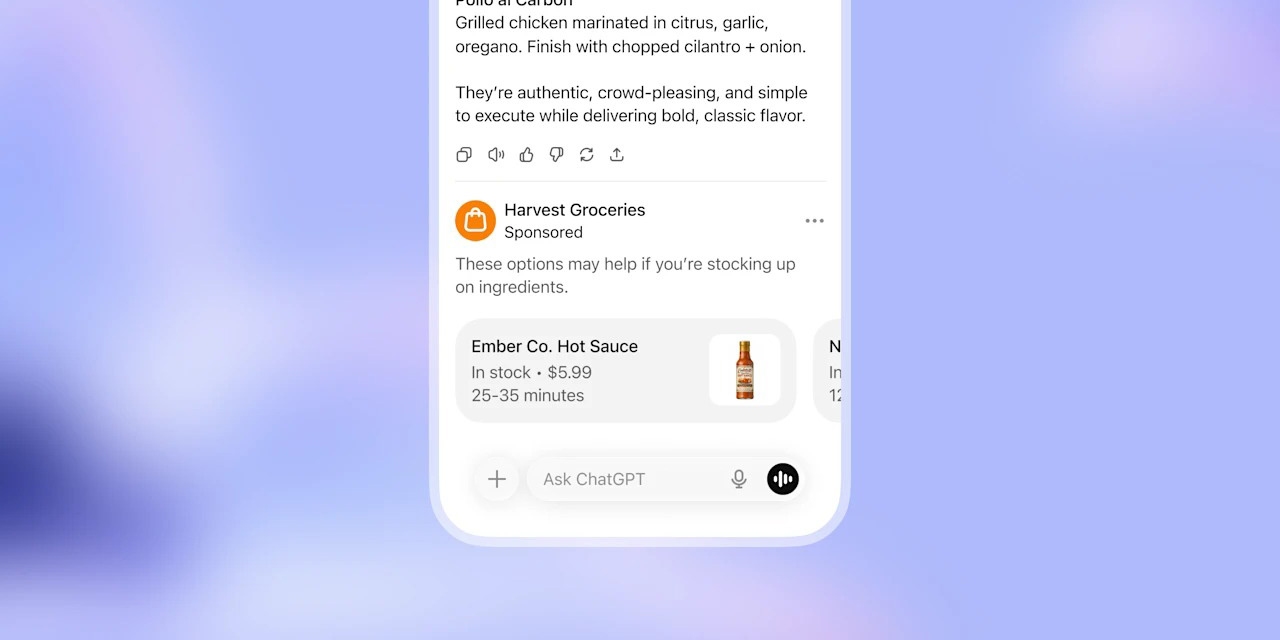
While an official, widespread rollout of specific ad formats hasn't been confirmed, the chatter within the industry and among market analysts points towards OpenAI's increasing pressure to generate substantial revenue to offset the astronomical operational costs of running its advanced AI models. Speculated ad implementations could range from sponsored responses and branded content subtly woven into conversations to more overt banner or interstitial ads. These ads would likely leverage contextual understanding from user queries, similar to how traditional search engines monetize. The aim would be to provide relevant commercial information without entirely disrupting the conversational flow, a delicate balance given ChatGPT's current utility-first design.
- Potential Ad Formats: Contextual sponsored links within responses, direct product recommendations, brand-sponsored conversational prompts, or even dedicated ad placements within the user interface.
- Monetization Imperative: Driving revenue to fund ongoing research, development, and the massive compute infrastructure required for AI models.
- Targeting Capabilities: Leveraging conversational context for highly personalized, real-time ad delivery.
- Broader Strategy: Ads would likely complement existing monetization like ChatGPT Plus subscriptions, API access, and enterprise solutions.
Context & Market Position
The move to incorporate ads places ChatGPT squarely in line with many 'free' digital services, from Google Search to social media platforms, which rely heavily on advertising for revenue. This positions ChatGPT as a direct competitor not just in AI capabilities but also in the attention economy. Its main rivals, such as Google's Gemini and Microsoft's Copilot, already operate within broader ecosystems that are deeply integrated with advertising models. Google, in particular, has a mature ad platform that could easily extend into conversational AI. Should ChatGPT introduce ads, it would be a significant departure from its initial, uncluttered user experience, potentially altering its unique appeal. The challenge for OpenAI will be to integrate ads without alienating a user base accustomed to an ad-free environment, while still differentiating itself from competitors who might offer equally powerful, or more seamlessly integrated, ad-supported AI experiences.
Why It Matters (The Analysis)
The introduction of ads into ChatGPT represents a pivotal moment for OpenAI and the broader AI industry. For consumers, the immediate impact would be a noticeable shift in user experience. While it could keep the base tier free, 'not exactly subtle' ads risk disrupting the seamless, focused interaction that many users value, potentially eroding trust and driving some to competitors or the paid ChatGPT Plus tier for an ad-free experience. The perceived value of the free tier could diminish if ads become intrusive, transforming a helpful assistant into another platform vying for attention and product promotion.
For OpenAI, this move is a high-stakes gamble. It offers a clear path to significant revenue, crucial for sustaining its rapid growth and expensive operations. However, it also presents a major reputational risk. Balancing monetization with user satisfaction will be paramount. A poorly executed ad strategy could lead to user backlash, slower adoption of new features, and a tarnished brand image. Conversely, a cleverly integrated, highly relevant ad system could set a new standard for AI monetization, paving the way for other AI developers to follow suit and solidifying conversational AI's place as a mainstream, economically viable product.
“Monetization is an essential part of our long-term vision. To continue pushing the boundaries of AI research and making powerful tools accessible to everyone, we must explore sustainable revenue models. This means evolving how we deliver value, and carefully considering all options to keep our services viable for millions of users globally.”
— Mira Murati, CTO, OpenAI (Conceptual Statement on Monetization)
What's Next
The coming months will be critical for OpenAI as it navigates these monetization waters. We can anticipate pilot programs and iterative rollouts, likely testing various ad formats and user reactions before a full-scale implementation. The industry will be watching closely to see how users respond and how competitors react. OpenAI's approach to integrating advertising into ChatGPT will not only define its own future but also set a significant precedent for how AI models will be sustained and consumed in the coming years, potentially accelerating the commercialization of artificial intelligence.