Digg, a pioneering social news platform, has officially relaunched, aiming to redefine content discovery. The new iteration combines AI-powered aggregation with human curation to provide a high-quality, personalized news feed, targeting users fatigued by information overload and low-quality content on existing platforms.
Introduction (The Lede)
In a surprising turn for internet veterans, Digg, the pioneering social news aggregator that once stood as a titan of online content discovery, has officially relaunched. After years of changing hands and diminished relevance, the site aims to carve out a meaningful niche by leveraging a new approach combining human curation with artificial intelligence to surface high-quality news and articles in an increasingly noisy digital landscape.
The Core Details
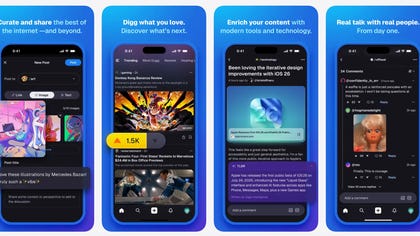
The resurrected Digg, as reported by CNET, moves away from the purely democratic "digg it" voting system of its original iteration. Instead, the new platform emphasizes a blend of algorithmic discovery and human editorial oversight, aiming to filter out sensationalism and low-quality content. Key features of the relaunched service include:
- AI-Powered Aggregation: Utilizing advanced algorithms to identify trending stories and summarize content, providing quick insights.
- Human Curation: A dedicated editorial team vets stories, ensures accuracy, and highlights content overlooked by algorithms, focusing on quality.
- Personalized Feeds: Users can expect a more tailored experience, with recommendations adapting to their interests and curated selections.
- Focus on Quality: A stated objective to prioritize well-researched articles and thoughtful analysis over clickbait and viral fluff.
The emphasis appears to be on providing a more refined and less chaotic news consumption experience than many existing social platforms offer.
Context & Market Position
Digg's initial rise in the mid-2000s predated the dominance of platforms like Reddit, X, and Facebook. It offered a novel way for users to discover and promote web content, democratizing news beyond traditional media gatekeepers. However, its controversial Digg v4 redesign in 2010, which alienated its core user base by prioritizing publisher content over community submissions, led to a mass exodus and its subsequent decline. Since then, it has been acquired multiple times, largely operating as a niche aggregator. Today, Digg re-enters a vastly different and highly fragmented social media and news aggregation market.
Competitors range from Reddit, which perfected the user-driven content aggregation model, to X, serving as a real-time news firehose, and dedicated news apps. The new Digg attempts to differentiate itself by positioning as a quality-first alternative. Unlike Reddit's often overwhelming and occasionally toxic user-generated content, or X's unfiltered torrent, Digg is aiming for a curated, intelligent feed. This strategy echoes the promise of products like Nuzzel or even Artifact. Its success will hinge on whether it can attract a significant user base tired of current alternatives without sacrificing the community engagement that made the original Digg so compelling.
Why It Matters
The relaunch of Digg holds significant implications. Firstly, it taps into a growing fatigue with the current state of social media and news consumption. Many users are overwhelmed by misinformation, algorithmically amplified outrage, and low-quality content. A platform genuinely committed to quality and intelligent aggregation, especially one leveraging AI for filtering and summarization, could resonate with those seeking a more discerning experience. If Digg can deliver on its promise of high-quality, curated news, it could attract a demographic willing to engage with such a service.
“In a world where algorithms have proven to be not all that trustworthy when it comes to news, where there is so much polarization, there is a place in the market for human curation."
— Mike Macadaan, General Manager, Digg (via CNET)
Secondly, its blend of AI and human curation is a compelling model. AI handles the vast scale of the internet, identifying patterns, while human editors provide critical judgment and nuance. This hybrid approach might be the sweet spot for combating "info-obesity" and restoring trust in online news discovery. However, Digg faces an uphill battle in user acquisition and re-establishing brand trust after previous failures. It must prove its new iteration is not just a nostalgic rehash but a valuable tool effectively addressing contemporary pain points. The challenge will be scaling this curated quality without becoming too niche or slow for a fast-paced news cycle.
What's Next
Digg's immediate future hinges on its ability to attract and retain early adopters seeking a higher-quality news experience. The platform will need to demonstrate consistent, superior content curation and effectively communicate its value proposition in a crowded market. We'll be watching for how its AI and human editorial teams evolve their synergy and how quickly it can build a robust, engaged user community. Its success could set a precedent for how older internet brands find new relevance in the era of AI and information overload.