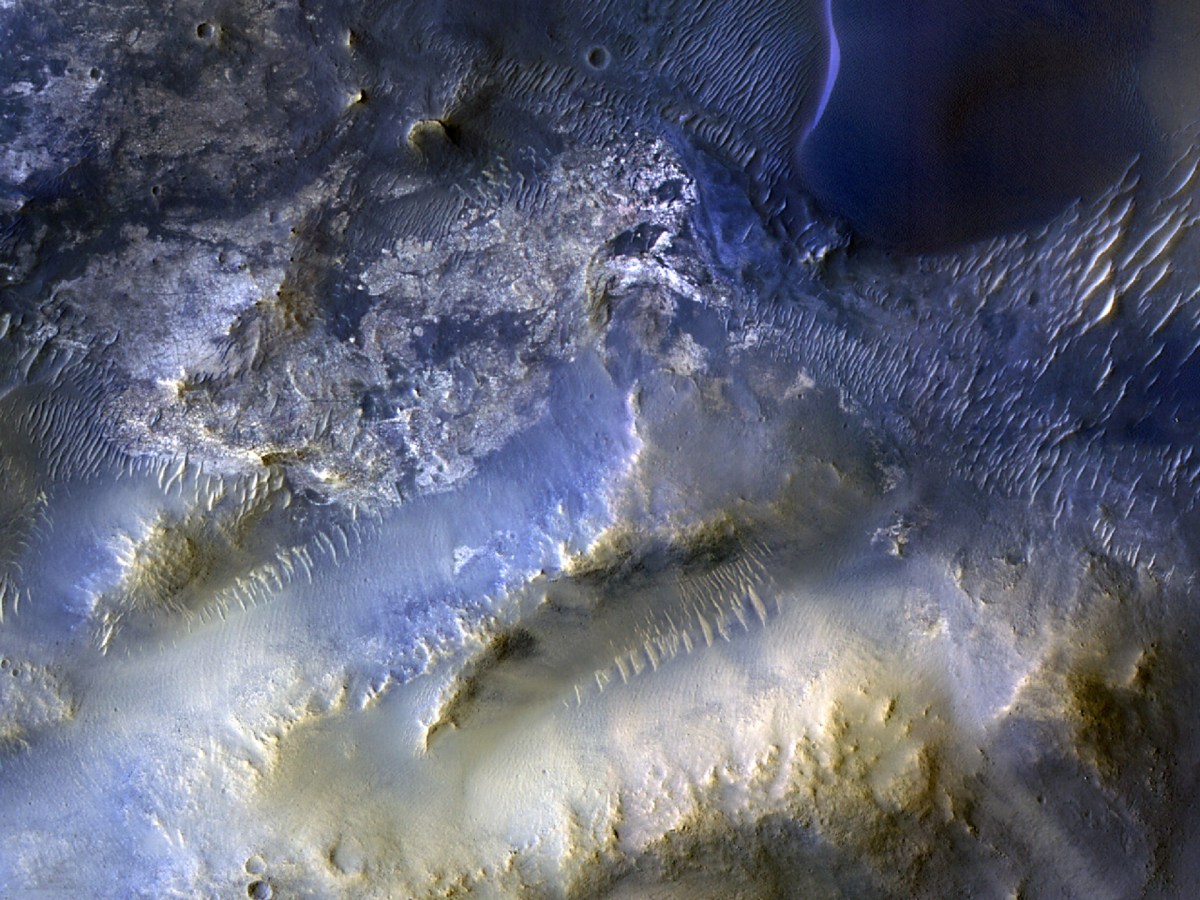
NASA's High Resolution Imaging Science Experiment (HiRISE) camera, aboard the Mars Reconnaissance Orbiter (MRO), has reached a remarkable milestone, capturing its 100,000th image of the Red Planet, providing unparalleled detailed views for nearly two decades.
Introduction (The Lede)
NASA's High Resolution Imaging Science Experiment (HiRISE) camera, a pivotal instrument aboard the Mars Reconnaissance Orbiter (MRO), has achieved a monumental milestone, capturing its 100,000th high-resolution image of the Red Planet. This extraordinary accomplishment underscores nearly two decades of continuous, unparalleled Martian observation, providing scientists with an invaluable, microscopic view of a world millions of miles away. Since its launch, HiRISE has been instrumental in reshaping our understanding of Mars' geology, climate, and potential for past or present life, cementing its legacy as one of humanity’s most powerful eyes in space.
The Core Details
The MRO spacecraft, launched in 2005 and arriving at Mars in 2006, hosts six science instruments, with HiRISE being its premier imaging tool. Managed by the University of Arizona, HiRISE is the most powerful camera ever sent to an extraterrestrial body, capable of capturing details as small as 10 inches (25 centimeters) across from an orbital altitude of 186 miles (300 kilometers). This incredible resolution allows for the meticulous study of surface features and dynamics previously invisible from orbit. Over its 18 years of operation, the camera has amassed an astonishing volume of data and imagery:
- Total Images: 100,000 high-resolution frames of the Martian surface.
- Data Volume: Over 1,034 terabits of raw data transmitted back to Earth.
- Area Imaged: Approximately 255,000 square miles (660,000 square kilometers), roughly the size of Texas.
- Primary Uses: Studying Martian geology, monitoring seasonal changes, identifying potential landing sites for future missions, and mapping safe routes for surface rovers.
Context & Market Position
HiRISE stands alone in its class among orbital cameras studying Mars. While other orbiters, like NASA's Mars Odyssey and ESA's ExoMars Trace Gas Orbiter, carry capable imaging instruments, none match HiRISE's resolving power. This unique capability allows it to act as a crucial bridge between orbital reconnaissance and surface exploration. Its images provide vital context for discoveries made by rovers such as Curiosity and Perseverance, often allowing scientists to pinpoint the precise locations of ground-level observations or confirm the nature of surface features. HiRISE has revolutionized our understanding of Martian surface processes, revealing evidence of active dust devils, carbon dioxide avalanches, shifting sand dunes, and even potential seasonal flows of briny water, offering dynamic insights into the planet’s ever-changing environment. It is an indispensable tool for planetary scientists worldwide, influencing virtually every major Mars research project.
Why It Matters
The 100,000-image milestone for HiRISE is more than just a number; it represents a profound leap in our understanding of Mars. The unparalleled detail provided by these images has led to countless scientific breakthroughs, from mapping ancient riverbeds and volcanic flows to identifying subterranean ice deposits crucial for future human missions. For consumers and the general public, HiRISE images offer stunning, often breathtaking, visual access to another world, fostering public engagement in space exploration. For the industry, the data collected by HiRISE is foundational for planning future missions, enabling engineers and scientists to identify safe landing zones, evaluate potential hazards, and plot precise trajectories for rovers and, eventually, human explorers. The longevity and reliability of HiRISE also underscore the value of long-duration missions, proving that robust engineering and dedicated science teams can yield continuous, groundbreaking insights over many years.
“HiRISE has been a game changer for Mars science. Its detailed images have not only transformed our understanding of the planet’s geology and climate but have also become an indispensable tool for future missions, helping us select landing sites and map routes.”
— Dr. Leslie Tamppari, MRO Deputy Project Scientist, NASA Jet Propulsion Laboratory
What's Next
As HiRISE continues its mission, its vast archive of images will remain an essential resource for the scientific community, informing future research and exploration initiatives. The camera is expected to continue operations for the foreseeable future, contributing to critical decisions for upcoming missions like the Mars Sample Return campaign. Its data will undoubtedly play a pivotal role in selecting the precise locations for future sample collection and in guiding the first human explorers to the Red Planet, ensuring that humanity’s quest to uncover Mars’ secrets continues with the clearest vision possible.