
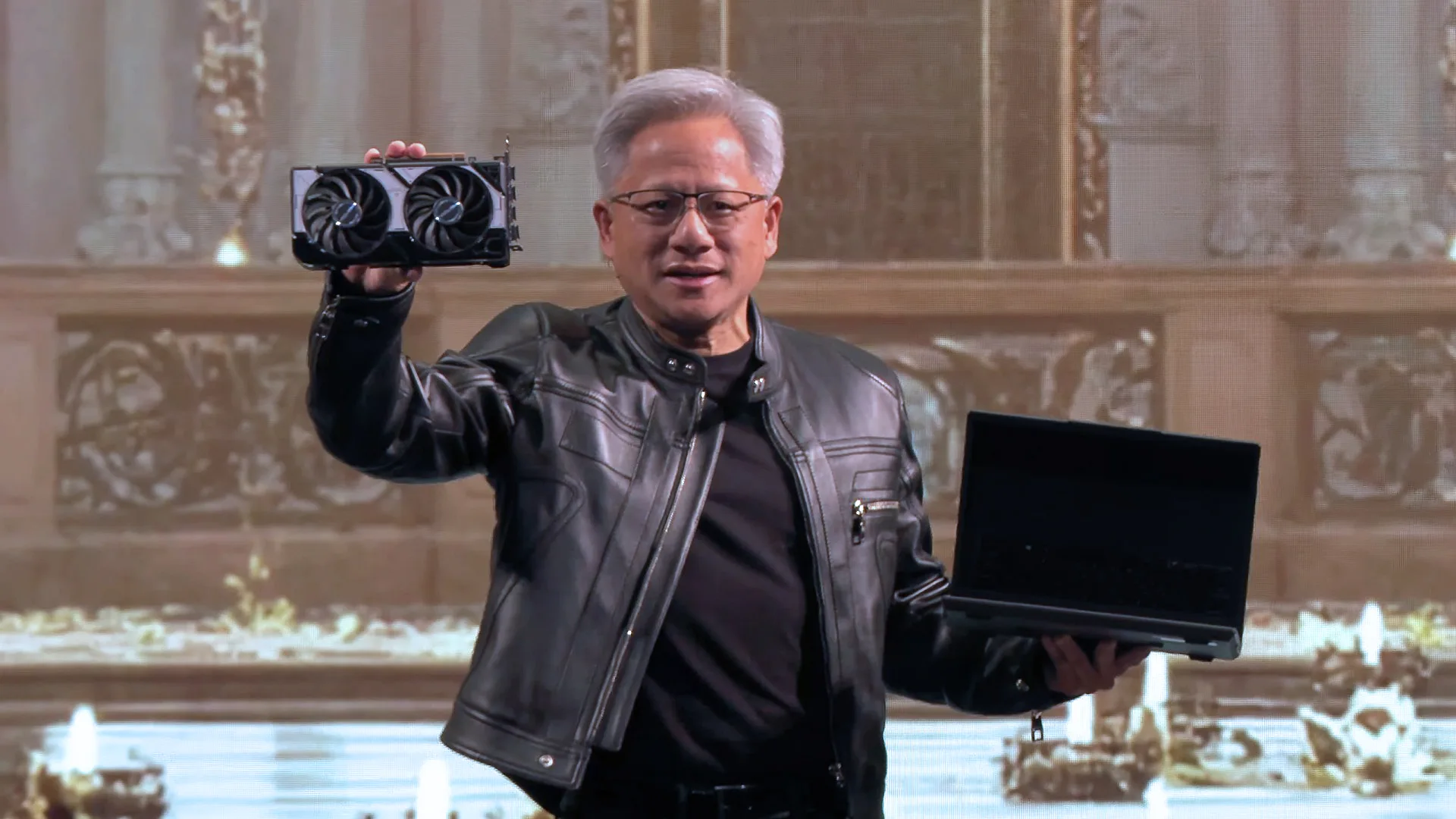
Industry anticipation is reaching a fever pitch as reports suggest CES 2026 will finally be the stage where Nvidia reveals key details about its next-generation RTX 50 Super graphics cards, promising to set new benchmarks for gaming and AI workloads and shaping the future of high-performance computing.
Introduction (The Lede)
The tech world is abuzz with anticipation as CES 2026 is increasingly circled as the stage for Nvidia to lift the veil on its highly anticipated RTX 50 Super series GPUs. Following a detailed report from Digital Trends, the industry is looking ahead to the event for concrete answers regarding the performance, features, and market positioning of these next-generation graphics cards, which are expected to redefine capabilities for gamers, content creators, and AI professionals alike. This potential unveiling marks a pivotal moment for the graphics card market, offering a glimpse into Nvidia's strategic roadmap for the coming years.
The Core Details
While official specifications, pricing, and specific release dates for the RTX 50 Super series remain entirely unconfirmed and highly speculative, industry patterns and past Nvidia launches offer valuable insight into what might be expected. The 'Super' designation, historically seen with the RTX 20 Super and RTX 40 Super series, typically signifies a mid-cycle refresh of an existing architecture. These refreshes usually offer enhanced core counts, higher clock speeds, and often increased video memory over their non-Super counterparts, all while aiming for a competitive price point to stimulate sales and combat rival offerings.
- Anticipated Architecture: The RTX 50 series is widely expected to be built upon Nvidia's upcoming Blackwell architecture, succeeding the current Ada Lovelace (RTX 40 series).
- Expected Performance Gains: Blackwell is rumored to bring significant advancements in raw rasterization performance, enhanced ray tracing acceleration, and notably, improved AI capabilities via new Tensor Cores.
- "Super" Enhancement Focus: Should the pattern hold, RTX 50 Super variants would likely feature more CUDA Cores, RT Cores, and Tensor Cores than their base RTX 50 series counterparts, alongside potential memory bandwidth improvements.
- Target Reveal: The Digital Trends report specifically points to CES 2026 as the crucial moment when these long-awaited details for the 'Super' variants are finally expected to be confirmed, offering a clearer picture of Nvidia's strategy for this mid-cycle refresh.
These details, once confirmed, will be critical for understanding Nvidia's performance hierarchy and competitive stance in the high-end GPU market.
Context & Market Position
Nvidia currently holds a dominant position in the discrete graphics card market with its RTX 40 series, built on the Ada Lovelace architecture. However, competition from AMD's RDNA 3-based Radeon GPUs and Intel's nascent Arc series remains a constant factor. The introduction of 'Super' variants has proven to be a highly effective strategy for Nvidia, allowing them to inject fresh performance and value into their product stack without a full generational leap. This approach helps maintain consumer interest, counter competitive pressure, and address evolving market demands, especially as games become more graphically intensive and AI workloads on consumer hardware grow.
The RTX 40 Super series, launched at CES 2024, successfully offered compelling performance uplifts at aggressive price points, particularly with the RTX 4070 Super and RTX 4070 Ti Super. For the RTX 50 series, a 'Super' refresh at CES 2026 would likely come approximately a year after the initial RTX 50 series launch (anticipated in late 2025). This timing aligns with Nvidia's typical cadence and allows them to respond to market dynamics and any potential competitive launches from AMD or Intel in the interim. The move would also reinforce Nvidia's leadership in AI acceleration, a rapidly growing sector where their GPUs are heavily favored.
Why It Matters (The Analysis)
The potential unveiling of Nvidia's RTX 50 Super GPUs at CES 2026 holds immense significance for several stakeholders. For consumers, particularly PC gamers and content creators, it signals a forthcoming wave of powerful hardware that could redefine visual fidelity and workflow efficiency. If the 'Super' variants follow historical patterns, they could offer a crucial performance-per-dollar sweet spot, making high-end gaming and professional applications more accessible without requiring an immediate upgrade to the top-tier, first-wave RTX 50 cards. This could invigorate upgrade cycles and push the boundaries of what's possible in interactive entertainment and digital creation.
From an industry perspective, the RTX 50 Super series will undoubtedly intensify competition. AMD and Intel will need to strategically plan their counter-responses, potentially leading to more innovative features and aggressive pricing across the board. Furthermore, the advancements in AI capabilities within the Blackwell architecture, especially amplified in 'Super' variants, underscore Nvidia's strategic focus on AI beyond the data center. This will have ripple effects on how game developers integrate AI-powered features (like advanced upscaling, character AI, and procedural generation) and how professionals leverage local AI models for tasks ranging from video editing to scientific simulations. It's not just about faster frames; it's about a more intelligent, capable computing experience.
“Nvidia’s Super line of graphics cards has proven to be a successful mid-generation refresh, reigniting enthusiasm and offering compelling value. Anticipation for the RTX 50 Super at CES 2026 highlights the continuous push for innovation in a fiercely competitive market.”
— Kevin Parrish, Digital Trends
What's Next
All eyes will now be firmly fixed on Nvidia's announcements leading up to and during CES 2026. While official confirmation is still over a year away, industry analysts and enthusiasts will be scrutinizing every leak and rumor for early indicators of what the RTX 50 Super series will bring. The period between now and the potential CES 2026 reveal will likely see the initial launch of the base RTX 50 series, setting the baseline for performance and features. Consumers considering a high-end GPU upgrade in the next year should keenly follow these developments, as the RTX 50 Super cards could offer a more refined and optimized entry point into the next generation of graphics processing.